If you are still weighing porcelain against quarried stone, the comparison page is the one you want. This page assumes that decision is made, and sets out what separates Everblue from the rest of the outdoor porcelain category.
- The collection starts from bluestone, not from the travertine-and-wood look book.
- The sizes exist to lay bluestone patterns, and the mixes are published.
- Slip resistance is a test result with a standard attached, not an adjective.
- One thickness, ¾″, and it is the outdoor one.
It was built to replace bluestone.
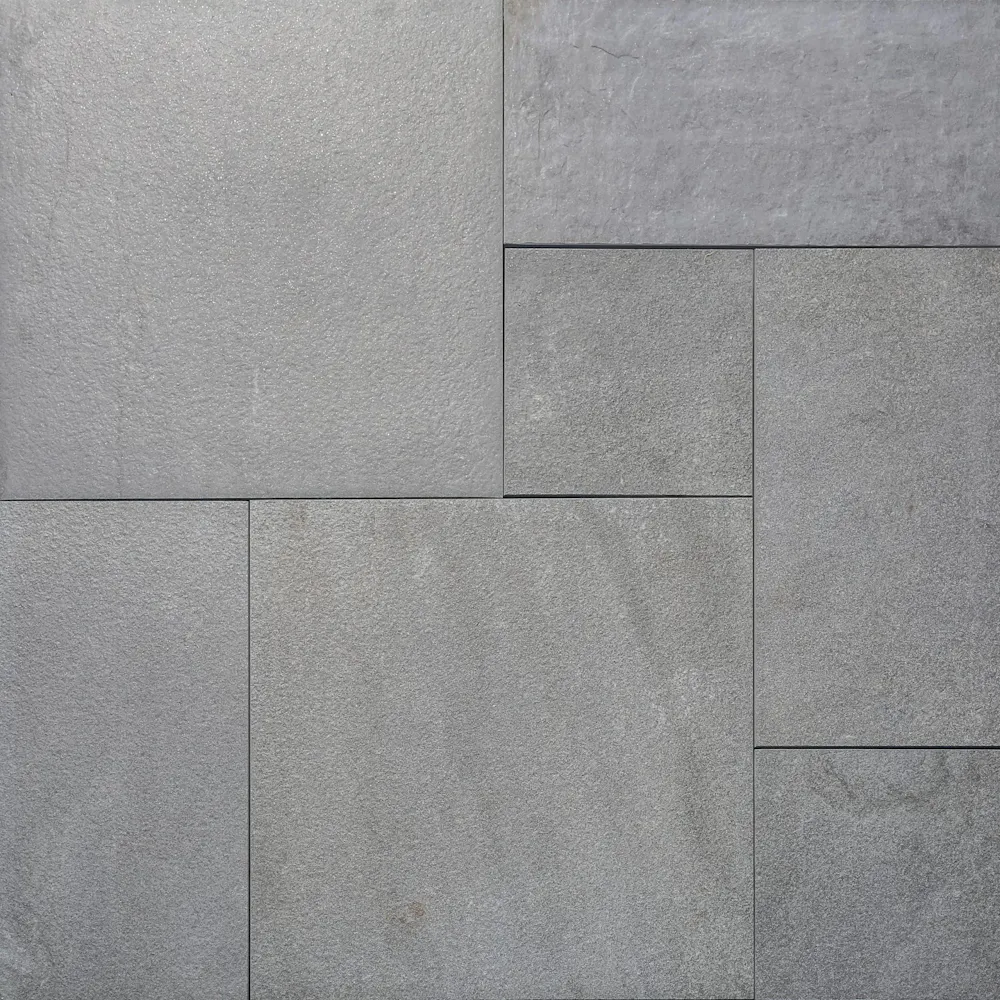
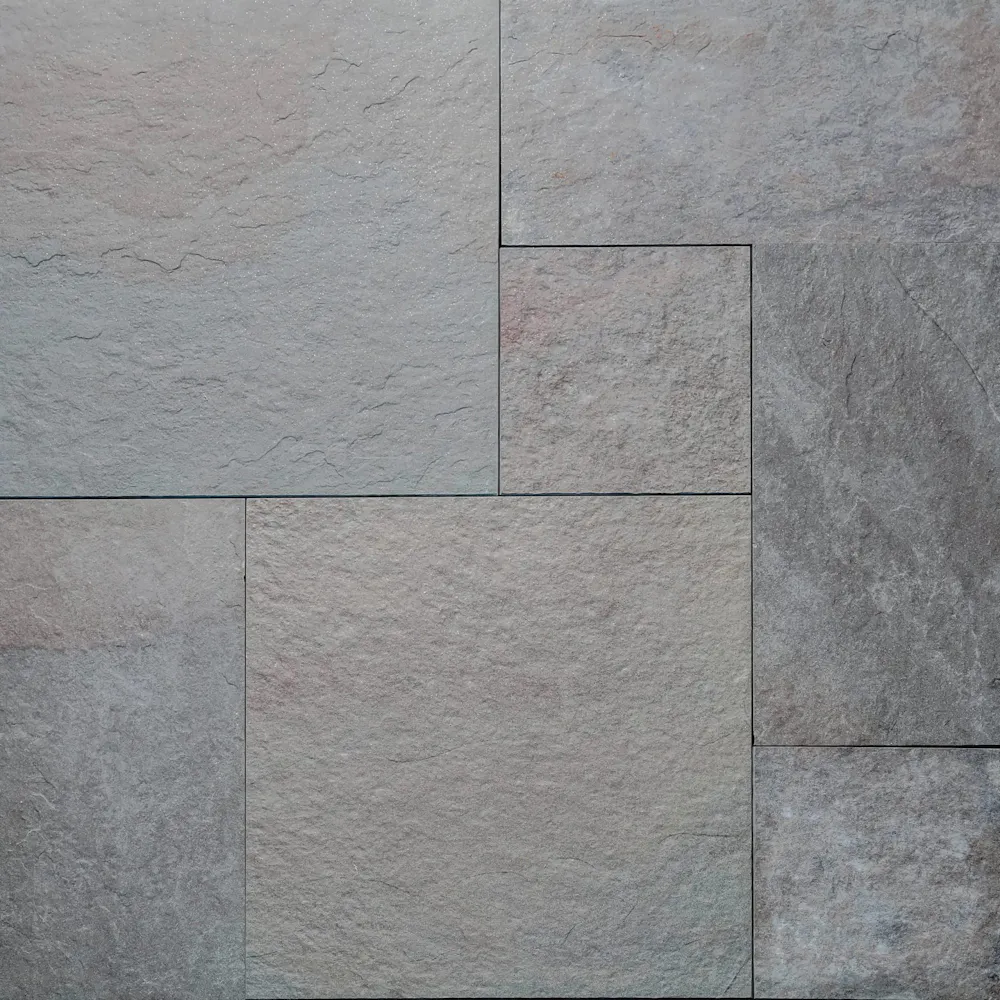
Most outdoor porcelain is a tile range that happens to come in 20mm: travertine looks, concrete looks, wood looks, with a gray or two added for the Northeast. Everblue runs the other way round. The collection starts from the two finishes Pennsylvania bluestone actually arrives in — sawn and consistent, or cleft and multi-toned — and the colorways are built to match them.
That is why Thermal Blue and Natural Variegated lead the range rather than sitting at the back of it, and why the other four are the grays and the sand that sit beside bluestone on a Northeast property.
The sizes follow the patterns, not the tile shop.
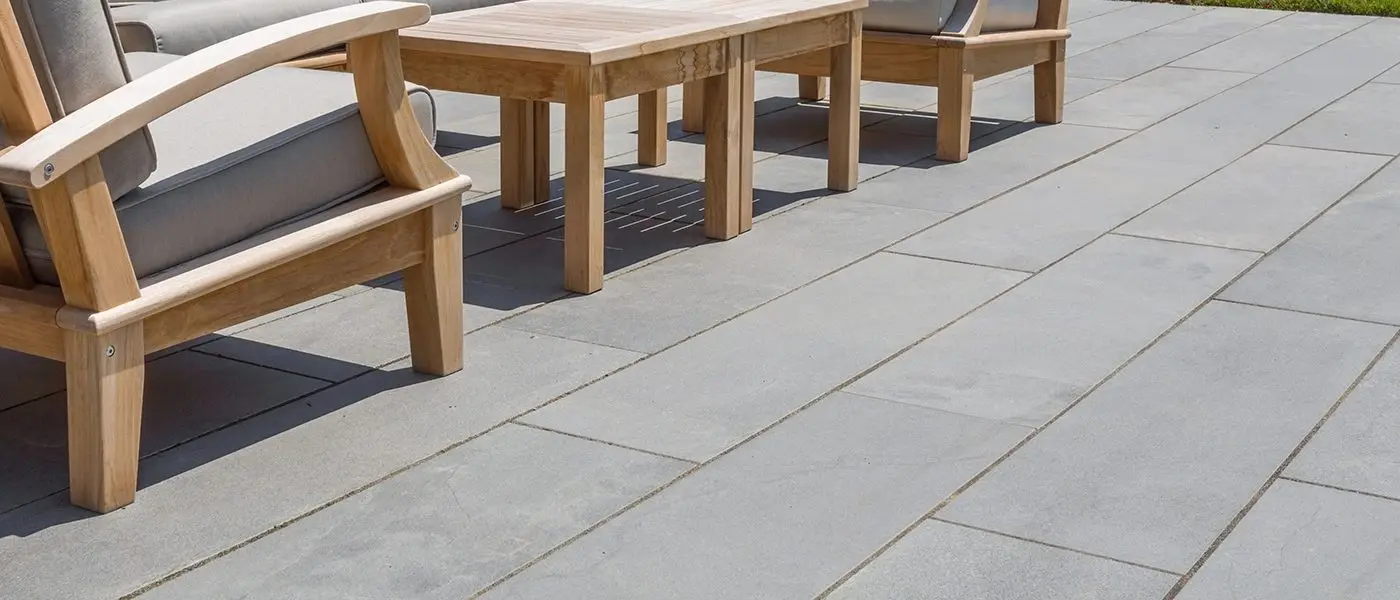
A 12″ × 48″ paver is an awkward thing to make and an awkward thing to ship. It exists in this collection because bluestone layouts need a long, narrow course, and it is made in Thermal Blue and Natural Variegated — the two colorways where that pattern work actually happens.
The six mixes are published with the share of the finished surface each size covers, so a supply yard can quote a pattern rather than guess at it. The patio planner works the pieces out from the shape of your space, and only offers the layouts your colorway is made in.
The slip rating is a test, not an adjective.
Almost everything sold for a pool deck is described as slip resistant. Everblue publishes the measurements and the standards they were taken against:
- R11
- Shod ramp test, DIN EN 16165:2023-02
- 0.65
- Dynamic coefficient of friction, ANSI A326.3, rated Exterior Wet
- A+B+C
- Barefoot ramp test, DIN 51097 — all three classes
The full sheet, issued 5 October 2026 for Smoke, Dark Select and Storm Gray, is on the slip resistance page and prints as a one-page PDF you can send to a specifier.
One thickness, and it is the outdoor one.
Everblue is ¾″ (20mm) throughout. There is no thinner indoor gauge in the range being sold for outdoor use, which is the quiet failure mode in this category: a 10mm tile set outdoors on a sand base will not survive a Northeast winter, whatever the showroom says.
Exterior rated is a specific set of certifications rather than a marketing phrase, and what it actually certifies is worth reading before you compare two products that both claim it.
It goes where stone cannot.
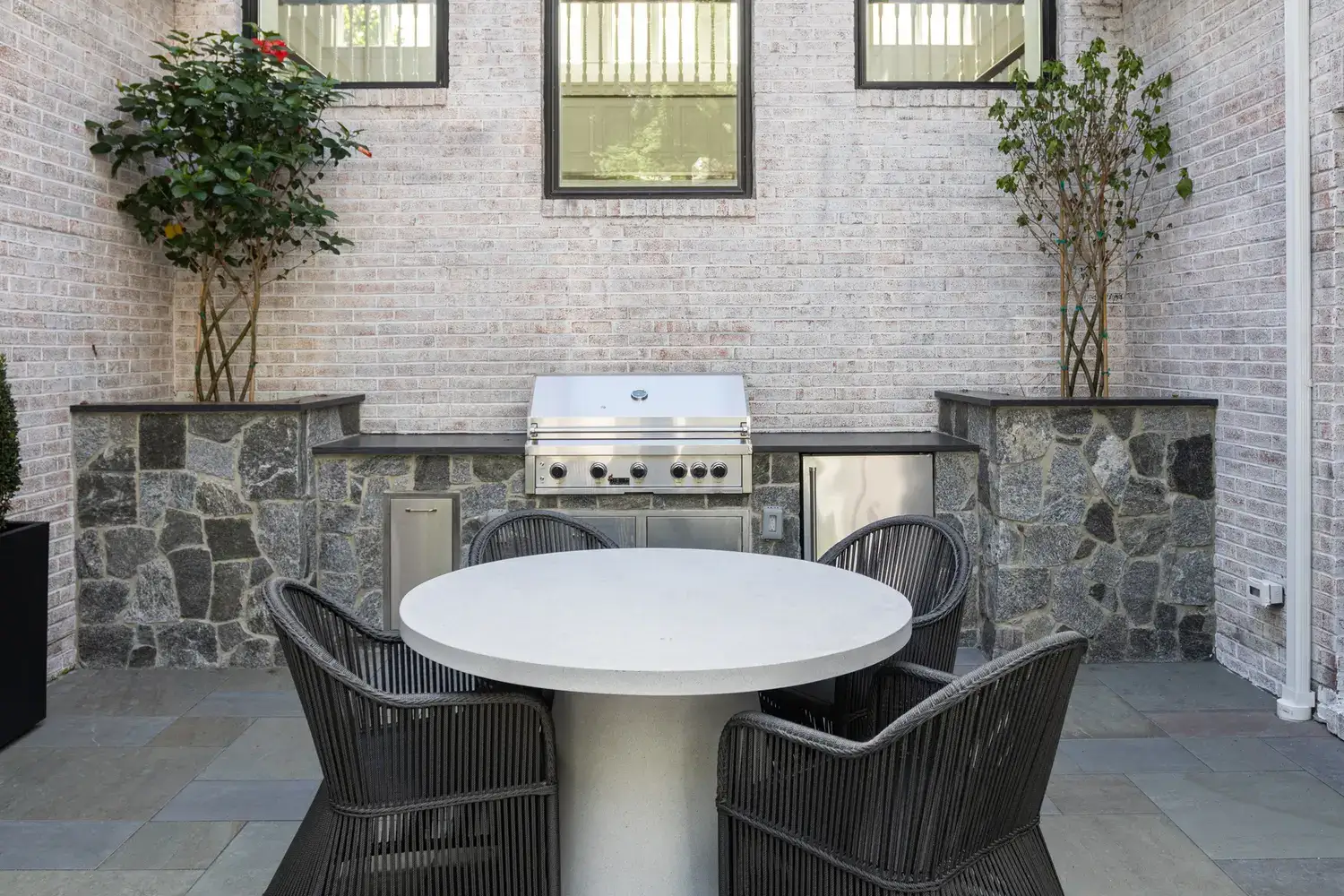
At about 9 lb per square foot, Everblue is roughly half the weight of thermal bluestone and under a third of variegated. On a roof deck or a pedestal system that is not a convenience, it is the difference between a structure that carries the load and one that does not.
It is sold through yards, with the people who set it.
Everblue is not sold direct. It goes through supply yards and distributors, alongside installers who have laid it before — which matters more with porcelain than with stone, because the setting method is less forgiving and the pavers are never butt-jointed.
Find a yard or an installer
It is warranted by the people who make it.
Everblue is made by Evercore Surfaces, and the warranty comes from them rather than from a reseller. The LEED reference is published for specifiers who need the sustainability data.